Pile wall (secant or tangent)
Pile wall (secant or tangent)
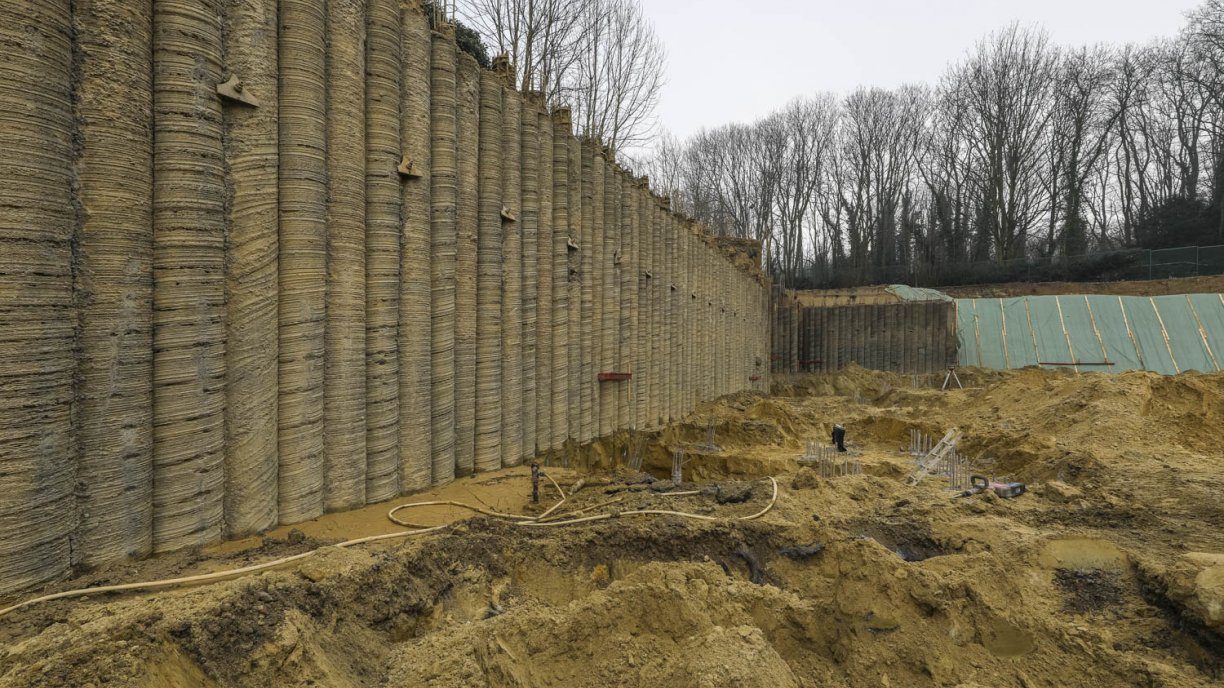
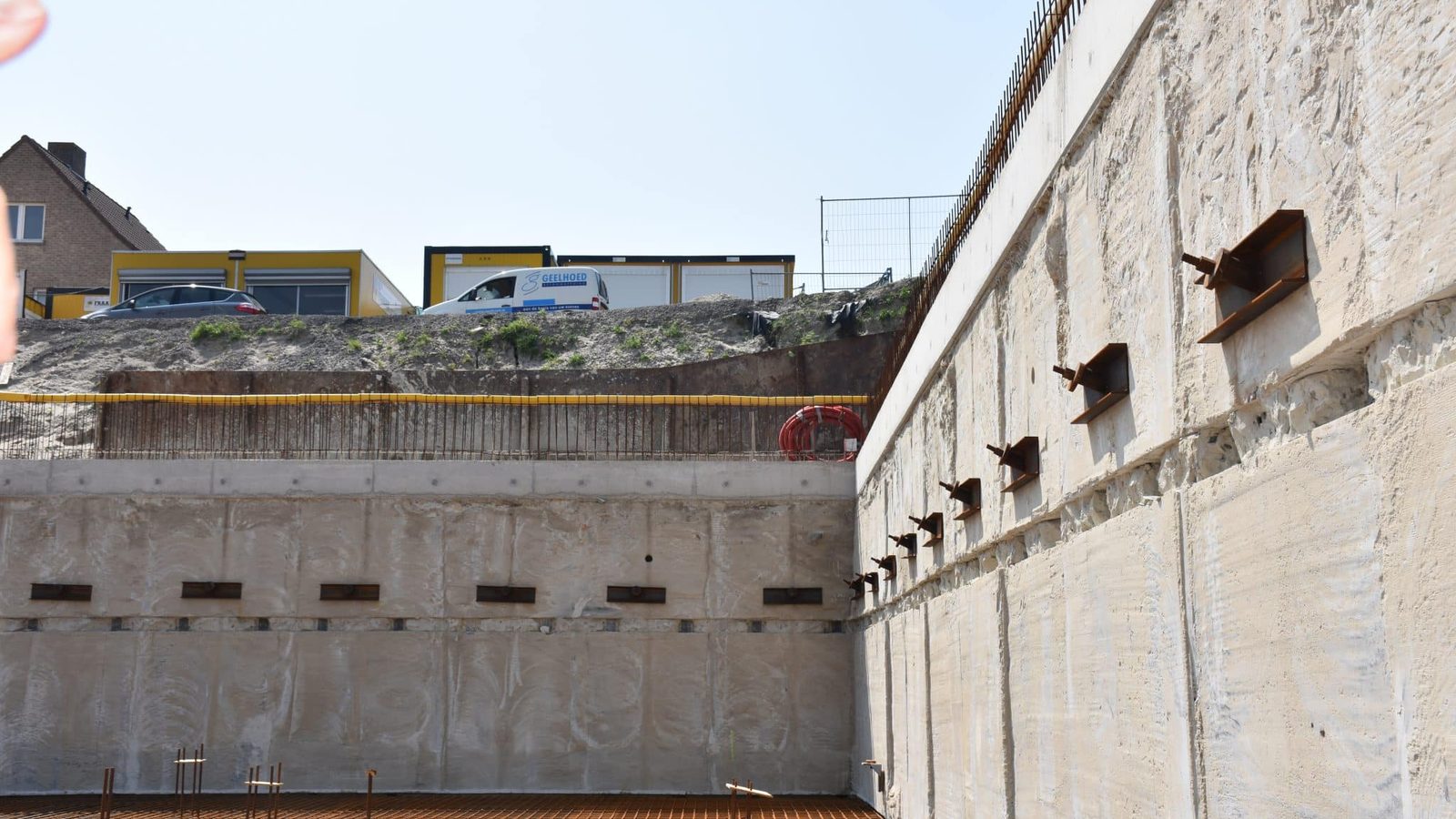
A pile wall is a continuous row of bored concrete piles forming a retaining — and often water cut-off — wall. Secant pile walls slightly overlap the piles (watertight); tangent pile walls have the piles touching (above the water table). A robust, vibration-free solution well suited to deeper excavations next to existing buildings.
When to use
- Deep excavations up to 14 m, including next to existing buildings
- Applications below the water table (secant pile wall with temporary cut-off)
- Permanent basement or car-park walls with vertical bearing capacity
- Sites with strict vibration and noise requirements
- Staggered variant: shorter primary piles between longer secondary piles, suited to settlement-sensitive surroundings
What we deliver
- Pile diameter (auger 0.4–0.7 m; bored 0.6–1.5 m), spacing, embedment and reinforcement
- Earth, water and surcharge analysis to Eurocode 7 — shape factor, group effect and excavation influence included
- Anchor, waling and strut detailing, with anchors at pile intersections
- Layout, sections, reinforcement details and ring-effect verification for silo structures
Technical notes
- Curing times: minimum 8 h between primary and secondary piles; in practice 10 days before excavation
- Tangent pile wall requires groundwater at least 0.5 m below the excavation level; openings to be sealed after excavation to prevent erosion
- Tolerances: 25 mm with a guide beam, 75 mm without; ±100 mm vertical, 1.3 % tilt; bulges up to 100 mm
- Permanent applications: durability check to NBN EN 1992-1-1, NBN EN 206-1 and NBN EN 1536
- Stiffness and deformations lower than soldier pile walls or sheet piles under comparable conditions
Related services 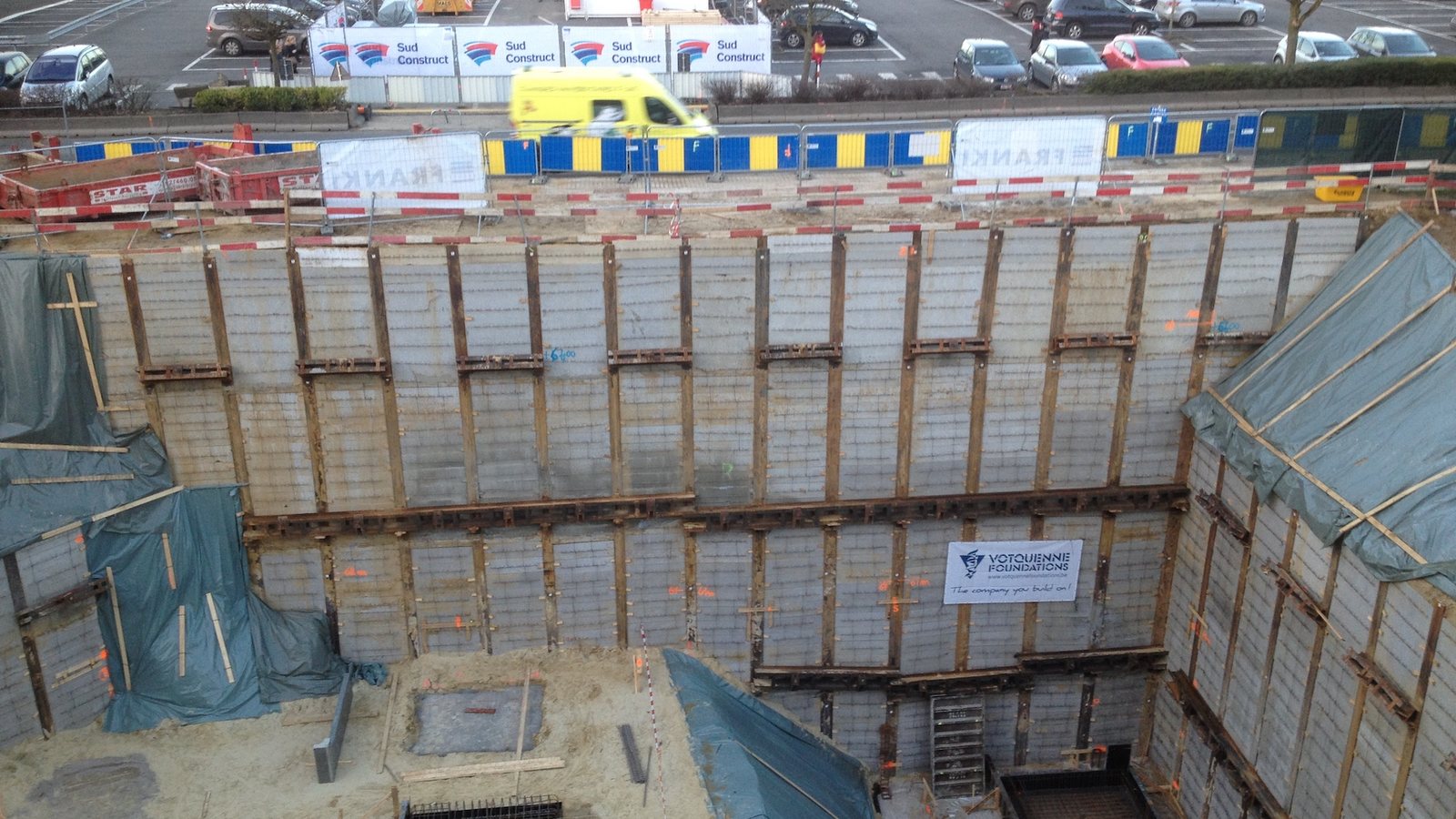
Soldier pile wall (Berlin wall)
Vertical steel soldier piles with timber, concrete or steel lagging between them.
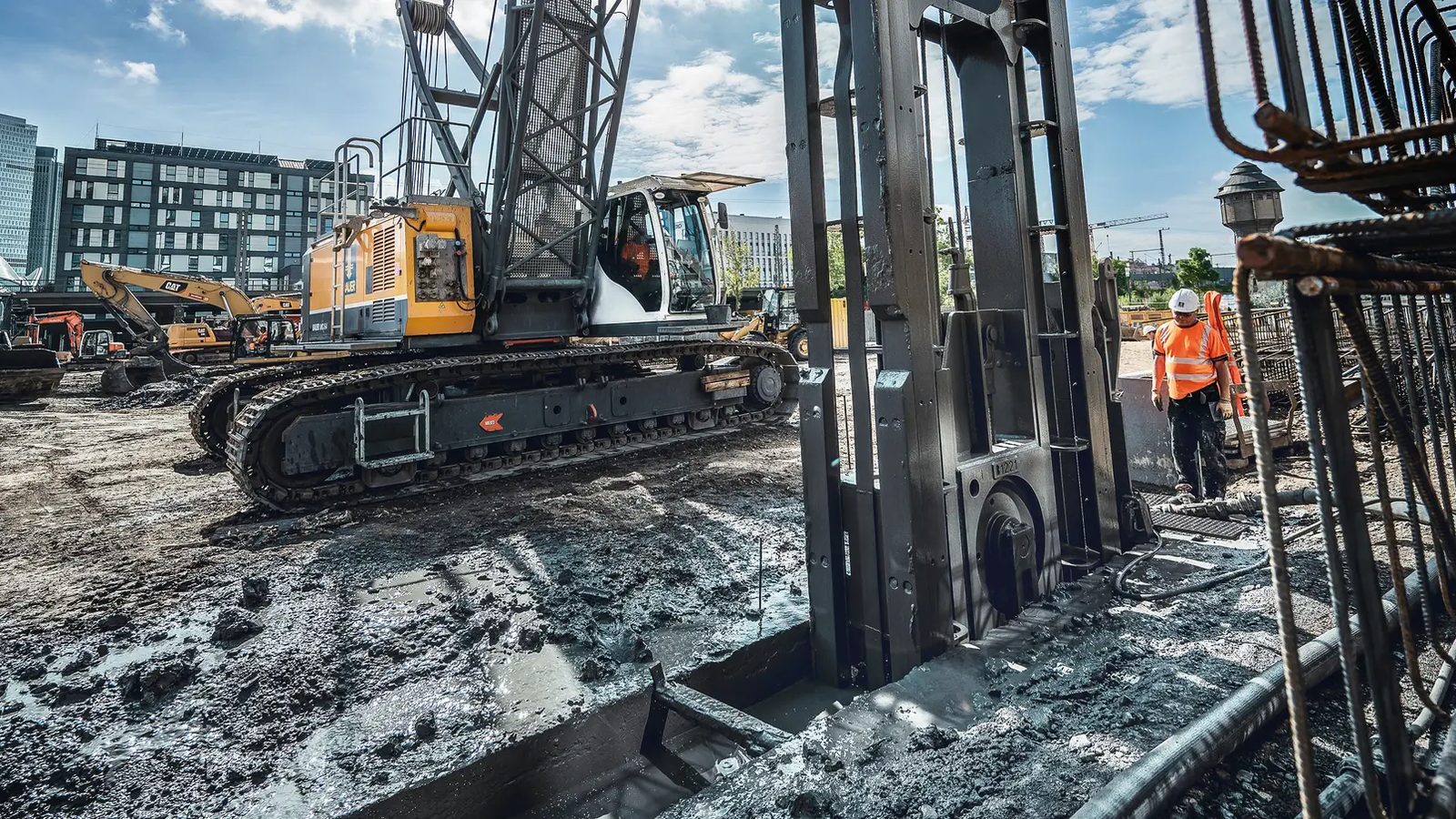
Learn more Soil-mix wall (CSM panels or columns)
In-situ soil-cement wall built up from panels (CSM) or overlapping columns.
Learn more Diaphragm wall
Reinforced-concrete wall cast in the ground — permanent retention, water cut-off and bearing.
Learn more