
Diaphragm wall
Diaphragm wall
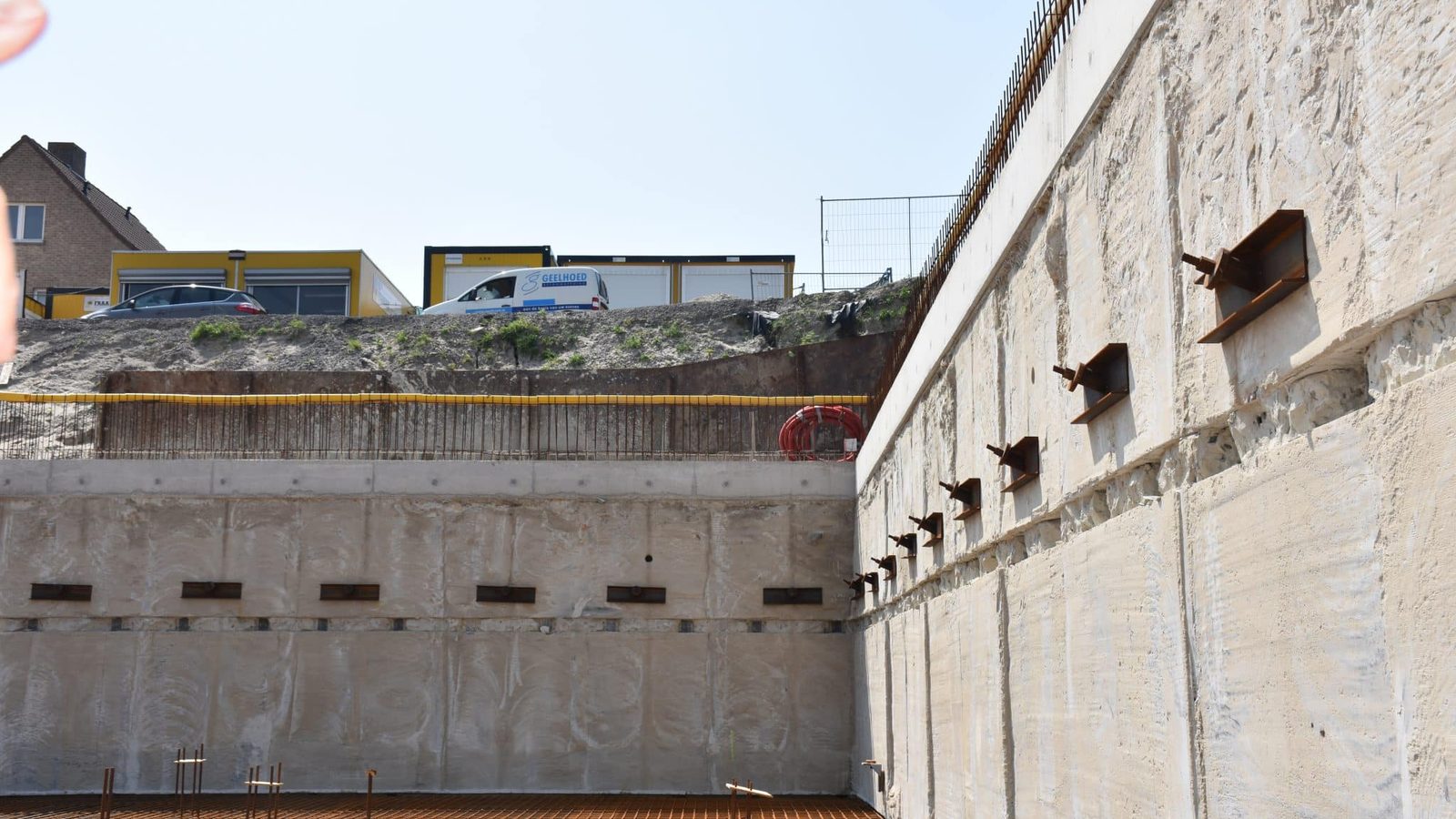
A diaphragm wall is a reinforced-concrete wall cast in the ground, built up from contiguous panels. It combines earth retention, water cut-off and bearing capacity in a single permanent structure — the go-to technique for deep urban excavations, underground car parks and infrastructure works.
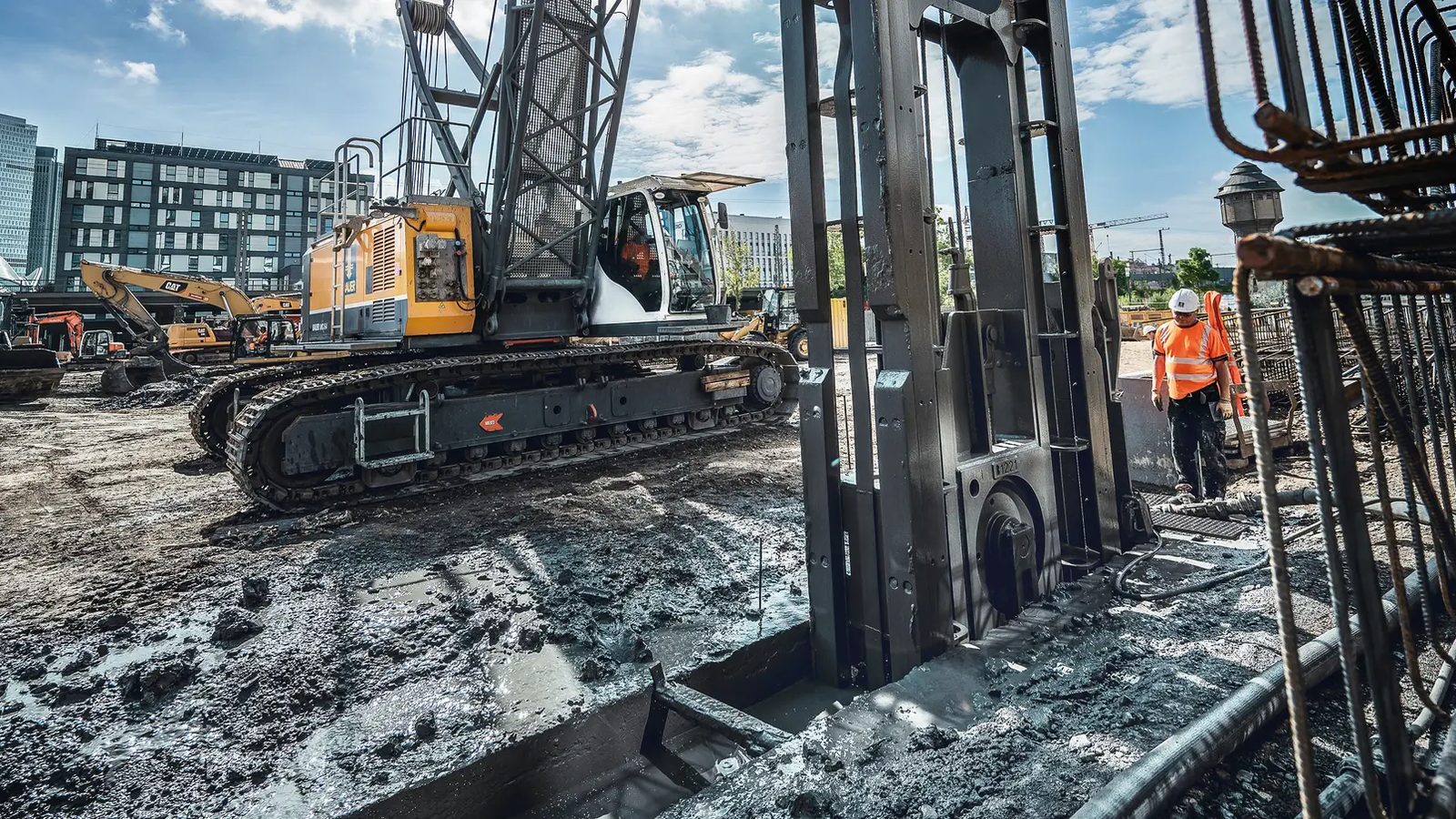
When to use
- Excavations of considerable (> 6 m) to very large (> 20 m) depth
- Combined permanent retention, water cut-off and bearing function
- Urban sites near existing foundations — attention to panel length, trench stability and sequencing
- Permanent basement walls, multi-storey car parks and infrastructure works
- Nearly all subsoils including rock (using a hydromill or chisels)
What we deliver
- Panel layout, width, depth and reinforcement design
- Trench stability analysis based on experience, calculation (DIN 4126) or a combined approach
- Geotechnical design to Eurocode 7, analogous to sheet pile walls
- Water-tightness class specification (ÖBV / CUR publication 231) and any additional measures — secondary barrier, drainage or concrete quality
- Layout with guide walls, joint profiles and reinforcement details
Technical notes
- Support fluid: bentonite-water (or polymer), level at least 2 m above the highest piezometric head and up to the guide walls
- Concrete: high flowability (S = 200 ± 30 mm), cement 350–400 kg/m³, W/C ≤ 0.6 — concrete rise > 3 m/h, cover ≥ 75 mm in permanent works
- Water-tightness: ÖBV classes 4–5 achievable under ~10 m head, class 3 under low heads; class 1 (fully dry) only without water pressure
- A diaphragm wall is not fully watertight — damp spots and dripping possible; the client sets the required tightness class beforehand
- Tolerances: 25 mm towards the excavation, 50 mm towards the soil, 1 % vertical deviation, 100 mm bulges; minimum 10-day wait before excavation
- Variants: cement-bentonite walls (single-phase, mostly cut-off), barrettes as deep foundation elements
Related services 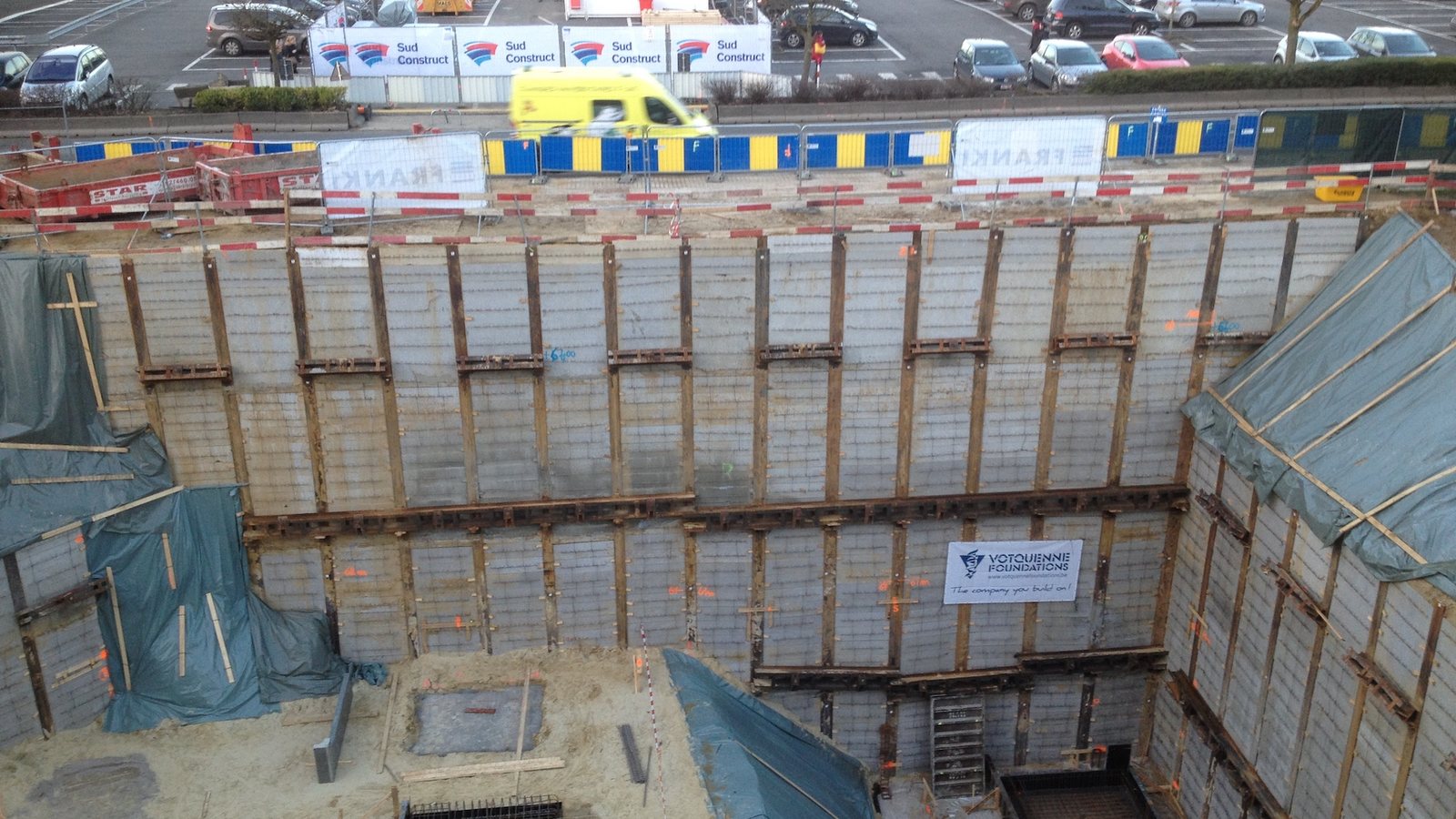
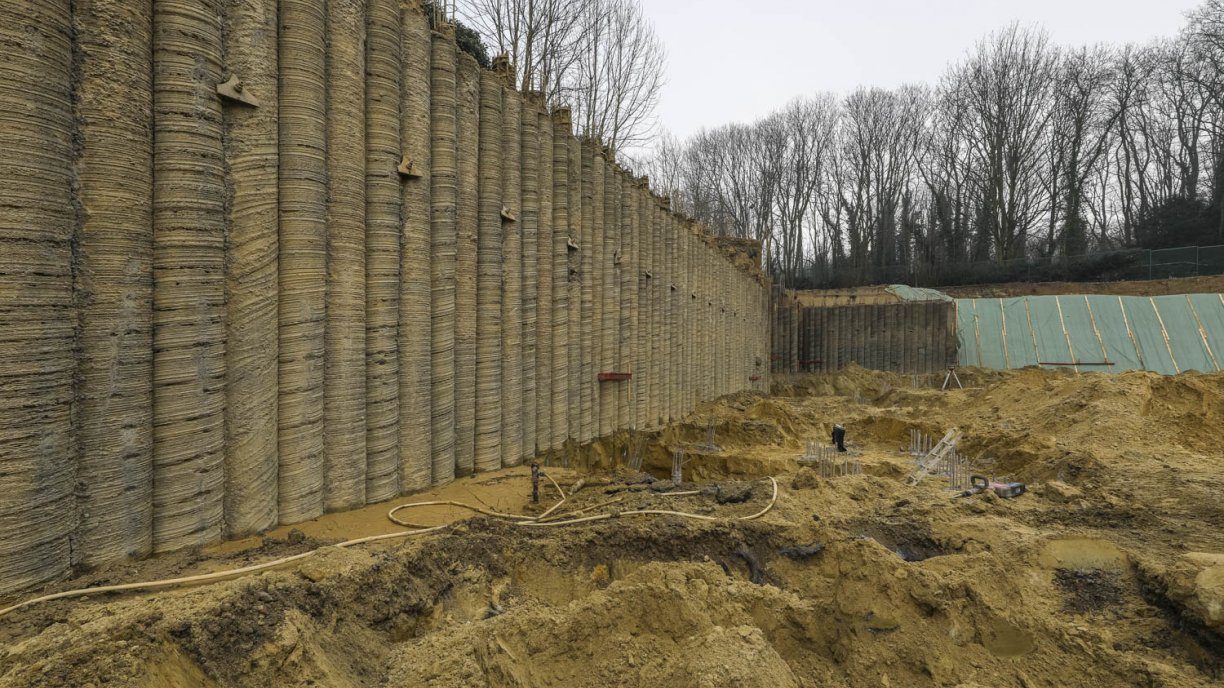
Soldier pile wall (Berlin wall)
Vertical steel soldier piles with timber, concrete or steel lagging between them.
Learn more Pile wall (secant or tangent)
Continuous row of bored concrete piles — secant (temporary water cut-off) or tangent (above the water table).
Learn more Soil-mix wall (CSM panels or columns)
In-situ soil-cement wall built up from panels (CSM) or overlapping columns.
Learn more